Industrielle 3D Druck Lösungen Bahn: Vergleich von Workflows, Validierungen und Strategien für die Bahnindustrie
Industrielle 3D Druck Lösungen Bahn: Transforming the Rail Industry
Estimated reading time: 6 minutes
Key Takeaways
- Industrielle 3D Druck Lösungen Bahn are specialized, scalable 3D printing systems designed for railway demands.
- They ensure compliance with stringent safety standards, making them essential for rail applications.
- Validated workflows minimize risks and enhance quality assurance throughout the production process.
- Turnkey solutions simplify integration while addressing unique challenges in public transportation.
- Consider a hybrid approach to balance internal capabilities with external 3D printing services.
Table of contents
Introduction
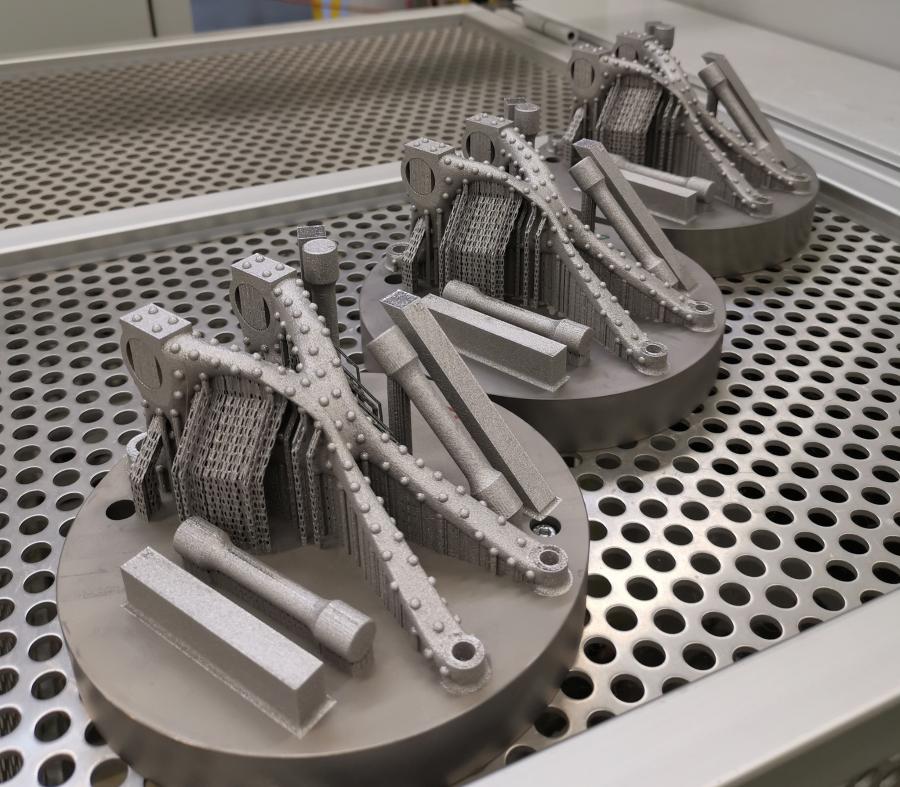
Industrielle 3D Druck Lösungen Bahn are advanced industrial-grade 3D printing solutions tailored specifically for the railway industry. They emphasize safety, durability, and compliance with stringent railway standards. Unlike desktop 3D printers, which are limited by smaller build volumes, lack validated processes, and do not use materials that meet railway standards, these industrial solutions are designed to meet every demand of the rail sector.
This blog post will compare investing in certified, scalable industrial workflows versus simpler desktop models. Keywords like Industrielle 3D Druck Lösungen Bahn, industrielle 3D Druck Systeme Bahn, and 3D Druck Dienstleister vs In-House Bahn will guide this exploration, helping decision-makers understand and navigate the intricacies of choosing the right 3D printing solutions for their rail operations.
Verstehen Industrielle 3D Druck Systeme Bahn
Industrielle 3D Druck Systeme Bahn are complete, validated setups including hardware, software, compatible materials, and defined processes, designed for safety-relevant and long-term rail applications.
Differences from Desktop Printers:
- Build Volume: Larger, suitable for big parts.
- Precision: Higher accuracy, meeting strict railway demands.
- Materials: Flame-retardant, durable, and certified.
- Quality Assurance: Integrated systems ensuring reliability.
Rail-Specific Requirements:
- Low flammability and smoke materials per rail standards.
- Dimensional accuracy for extensive parts.
- Resistance to temperature changes, vibration, and chemicals.
- Detailed process traceability for audits and certifications.
Common Applications:
- On-demand spare parts.
- Digital inventories.
- Interior components.
- Maintenance tools.
For more on industrial setups and rail-specific demands, visit source URL.
Validierte Workflows Additive Fertigung für die Bahnindustrie
Validierte Workflows additive Fertigung ensures that every aspect, from design to final inspection, is tested, documented, and certified.
Importance:
- Achieves repeatable part quality.
- Simplifies certification processes.
- Minimizes risks in safety-critical components.
Typical Validations in Rail:
- Fire classification.
- Mechanical properties.
- Aging behavior.
- Predefined approval procedures.
These workflows are often packaged as turnkey “material-process” combinations, complete with standard test plans for interior panels, mounts, and functional parts.
For research findings on validated workflows and benefits, visit source URL.
Turnkey 3D Druck Lösungen ÖPNV – Komplettlösungen für den öffentlichen Nahverkehr
Turnkey 3D Druck Lösungen ÖPNV are comprehensive packages including hardware, software, certified materials, training, and ongoing service, often with ready-to-use application templates.
Benefits:
- Enables rapid integration without extensive expertise.
- Addresses ÖPNV-specific challenges: heterogeneous fleets, short turnaround, long vehicle lifecycles.
- Offers faster deployment, predictable costs, and reduced organizational complexity with a single accountable partner.
Examples Include:
- On-demand spare parts.
- Interior refurbishments.
- Signage.
- Cover plates.
- Maintenance tools.
For a detailed look at turnkey solutions, visit source URL.
Qualitätssicherung 3D Druck Industrie – Sicherstellung von Zuverlässigkeit und Sicherheit
Key quality assurance (QA) methods in Qualitätssicherung 3D Druck Industrie ensure the reliability and safety of rail parts.
Methods Include:
- In-line process monitoring (layer observation, temperature and parameter tracking).
- Material and part testing.
- Standardized post-processing and cleaning procedures.
Non-destructive Testing Techniques:
- Visual and dimensional inspections.
- Volumetric scans per normative standards.
QA is crucial for complying with regulatory and internal mandates, especially for safety-relevant components. It integrates with validated workflows to allow repeatable releases and long-term fleet deployment.
For QA methods, see source URL.
3D Druck Dienstleister vs In-House Bahn – Welche Lösung passt?
Comparing 3D Druck Dienstleister versus internal In-House Bahn capabilities offers insight into strategic decisions.
3D Druck Dienstleister:
- Pros: Lower initial investment (pay-per-part), access to industrial equipment/materials, external expertise.
- Cons: Requires contractual trust, less control over IP/data.
In-House Setup:
- Pros: Direct control over design/IP, faster project turnaround, integration in existing workflows.
- Cons: Higher upfront costs, internal expertise required.
Hybrid Approach: Combines core strategic internal productions with outsourced peak and niche demands.
Comparison Table:
| Kriterium | 3D Druck Dienstleister Bahn | In-House 3D Druck Bahn |
|---|---|---|
| Anfangsinvestition | Niedrig (pay-per-part) | Hoch (Systemkosten) |
| Geschwindigkeit | Schnell bei Standardteilen | Sehr schnell |
| Know-how | Geringere Lernkurve | Kompetenzausbau |
| IP und Daten | Erfordert Vertrauen | Volle Kontrolle |
| Skalierung | Skaliert mit Dienstleistern | Erfordert Investitionen |
Explore the service model comparison at source URL.
Conclusion
Desktop 3D printers are suitable for prototypes and simple tools but fall short of railway industry standards in safety, compliance, and scalability. Industrielle 3D Druck Lösungen Bahn with validated workflows and turnkey concepts provide the framework needed for economic and compliant production.
Rail decision-makers should audit their 3D printing strategies concerning fire safety, documentation, lead times, and Total Cost of Ownership. Consider investing in industrial systems or hybrid setups, integrating 3D Druck Dienstleister and in-house capabilities to reduce downtime and support fleet modernization.
For more insights on efficient production, visit source URL.
Frequently Asked Questions
What are industrieller 3D Druck Lösungen Bahn?
Industrielle 3D Druck Lösungen Bahn are advanced 3D printing systems designed to meet the safety and quality requirements of the railway industry.
Why choose validated workflows?
Validated workflows ensure repeatability and compliance with safety standards, essential for safety-critical rail applications.
What is the advantage of turnkey solutions?
Turnkey solutions provide a comprehensive package for fast integration, addressing specific operational challenges of public transport systems.
Ein Kommentar
Die Kommentare sind geschlossen.